


The Fast Lane Fallacy: Why Downriver Races Aren't Training Shortcuts

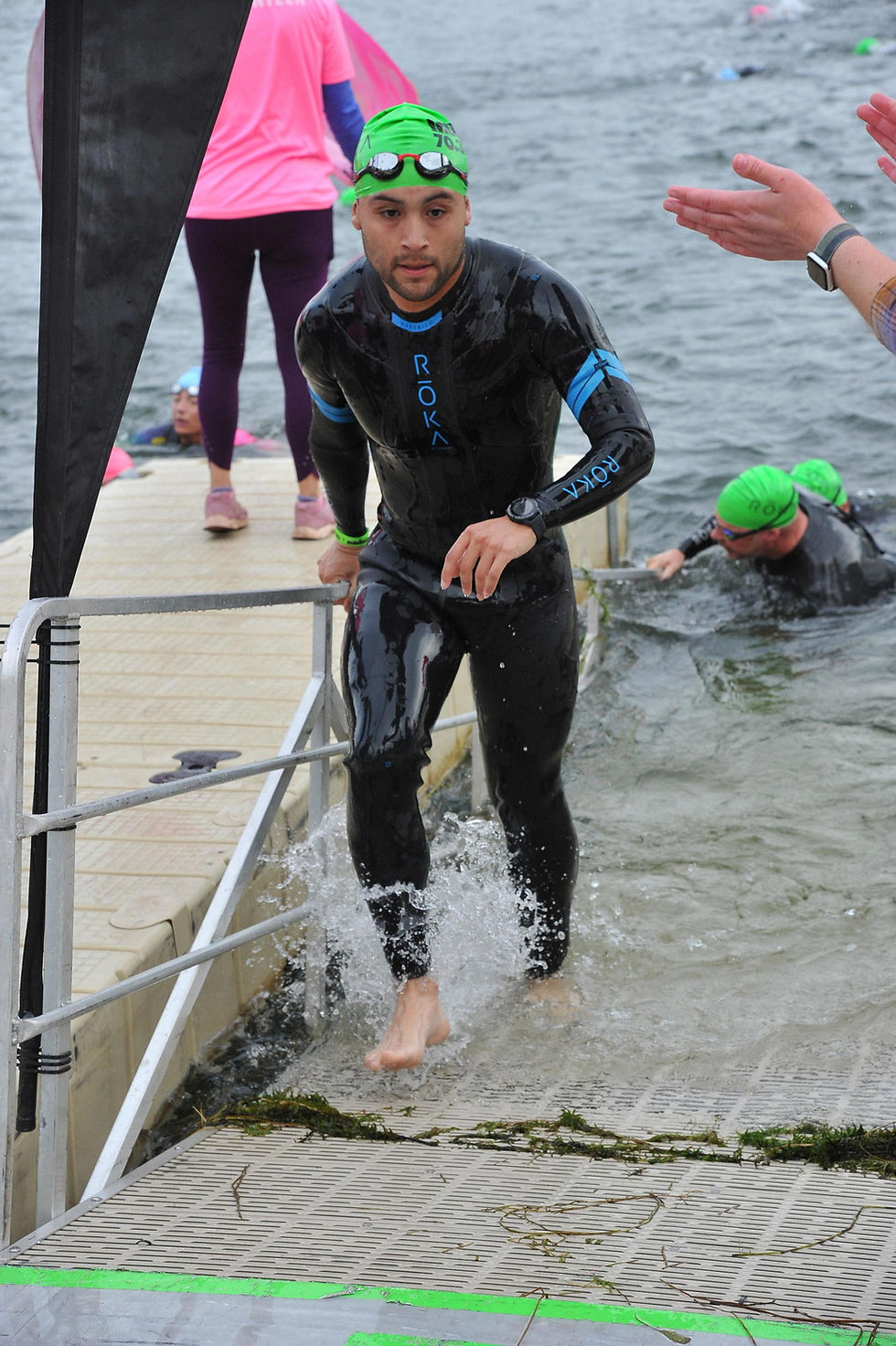
When preparing for an Ironman triathlon, many athletes make a critical error in their swim training: they focus solely on building up to the 2.4-mile race distance. While reaching that milestone is important, it's just the beginning of what serious triathlon swim training should entail. Even more surprisingly, this principle holds true even when your race features a downriver swim that promises faster times and easier conditions.
The Foundation: Why Volume Matters More Than Distance
Swimming is fundamentally different from running or cycling when it comes to training adaptations. In the water, your body must develop not just cardiovascular fitness, but also the intricate neuromuscular coordination that makes efficient swimming possible. This coordination—often called "feel for the water"—only develops through significant volume and repetition.
When you swim only the race distance in training, you're essentially practicing survival mode. Your technique breaks down, your stroke becomes inefficient, and you're fighting the water rather than working with it. By regularly swimming well beyond race distance, you build the aerobic base and technical proficiency that allows you to swim the actual race distance with relative ease, maintaining good form and saving energy for the bike and run.
The Aerobic Base: Your Swimming Engine
Unlike running, where most people can maintain a conversational pace for extended periods, swimming demands a much more developed aerobic system. The horizontal position, the breath restriction, and the full-body coordination required make swimming uniquely challenging from a cardiovascular perspective.
Professional triathletes commonly swim 4,000-6,000 meters per training session, even when preparing for shorter races. This volume isn't about showing off—it's about building the massive aerobic base that allows them to swim efficiently at race pace. When you can comfortably swim 4,000 meters in training, swimming 2,400 meters on race day becomes a controlled, strategic effort rather than a desperate survival swim.
The Downriver Deception
Here's where many athletes get caught in a dangerous trap: the downriver Ironman swim. Events like Ironman Arizona, Ironman Texas, and others feature river or lake courses with significant current assistance. Athletes see the faster swim times and assume they can get away with less training volume.
This thinking is backwards. The downriver swim isn't easier—it's different, and in many ways more demanding of your training preparation.
Why Downriver Swims Demand More Training
Current Variability: River currents aren't uniform. They vary by position in the water column, distance from shore, and even time of day. Swimming efficiently in current requires superior technique and the ability to adapt your stroke rate and timing on the fly. This adaptability only comes from extensive training volume.
Positioning Battles: When the current is helping everyone, positioning becomes even more critical. The difference between swimming in clean water versus fighting through a pack can mean several minutes. The fitness to maintain a higher pace when needed—to get into or stay with a good group—requires training well above race distance.
False Confidence: Many athletes undertrain for downriver swims, then find themselves unable to take advantage of the current because they lack the technical skills or fitness to swim efficiently in groups or adapt to changing conditions.
The Technical Development Factor
Swimming more than race distance isn't just about building fitness—it's about developing the technical proficiency that makes you genuinely fast in the water. Technique development requires time and repetition. When you're always swimming at or near your maximum distance, you're always in survival mode, and survival mode is where technique goes to die.
Longer training sessions allow for:
Extended periods of technical focus
Practice with fatigue management
Development of rhythm and timing
Refinement of breathing patterns
Building of muscular endurance specific to swimming
The Mental Game
There's a profound psychological benefit to regularly swimming well beyond race distance. When you've completed multiple 3,000-4,000 meter training sessions, stepping into the water for a 2,400-meter race creates a different mental state entirely. Instead of wondering if you can finish, you're strategizing about how to swim efficiently and save energy for the bike and run.
This mental confidence translates directly into better race performance. Confident swimmers start stronger, position themselves better, and remain calmer when conditions get challenging.
Practical Application: Building Your Swimming Volume
The key to implementing higher-volume swim training is gradual progression and smart structure. Don't jump from 2,000-meter sessions to 4,000-meter sessions overnight. Instead, build volume systematically:
Phase 1: Establish consistency with 2,500-3,000 meter sessions Phase 2: Add one longer session per week (3,500-4,000 meters) Phase 3: Make longer sessions the norm, with shorter recovery sessions
Within these longer sessions, vary the intensity and focus. Include technical work, aerobic base building, and race-pace efforts. The goal isn't to swim hard for the entire session—it's to accumulate time in the water while maintaining quality movement.
The Competitive Edge
In today's competitive triathlon landscape, every advantage matters. While your competitors are swimming just enough to survive the race distance, you're building the massive aerobic base and technical proficiency that allows you to swim the race distance efficiently and emerge from the water ready to dominate the bike and run.
This advantage becomes even more pronounced in downriver races. While others struggle to take advantage of the current due to poor positioning or inadequate fitness, you'll have the skills and conditioning to find the fastest water and maintain your position throughout the swim.

Conclusion: Embrace the Volume
Swimming more than race distance isn't about ego or showing off—it's about building the comprehensive fitness and technical skills that make you genuinely fast in the water. Whether you're facing a challenging open water swim or a downriver race that promises fast times, the athletes who consistently train above race distance are the ones who perform when it matters.
The water doesn't care about your training philosophy or your race strategy. It only responds to preparation, technique, and fitness. By embracing higher training volumes and building a massive aerobic base, you'll not only swim faster but also start the bike and run portions of your race with energy to spare.
Your competitors will be recovering from their swim survival effort. You'll be ready to race.


Comments